


April is Parkinson’s Awareness Month, a time dedicated to highlighting the growing global impact of Parkinson’s and the urgent need for greater awareness, earlier diagnosis and improved support for those living with the condition [1]. Parkinson’s is one of the fastest growing neurological disorders worldwide, with prevalence increasing rapidly owing to ageing populations and improved diagnosis, resulting in a rising burden on individuals, families and healthcare systems alike. In 2019, global estimates indicated that the prevalence of Parkinson’s surpassed 8.5 million cases worldwide and the number of affected individuals is projected to continue rising [2] – according to one study, cases will reach approximately 25.2 million by 2050, representing a 112% increase since 2021 [3].
Parkinson’s Awareness Month builds on the legacy of World Parkinson’s Day, marked annually on 11 April, the birthday of James Parkinson, who first described the condition in his 1817 work An Essay on the Shaking Palsy [4]. Throughout April 2026, awareness activities are aiming to improve understanding of the causes and symptoms of Parkinson’s, address the daily challenges faced by those affected, and highlight the importance of timely diagnosis and holistic care to improve quality of life [1].
What is Parkinson’s?
Parkinson’s is a progressive neurodegenerative disorder associated with loss of dopamine-producing neurons in a part of the brain called the substantia nigra (Figure 1) [5,6]. The resulting lack of dopamine in the striatum – to which these neurons project – is responsible for the classic motor symptoms of Parkinson’s. At a molecular level, the death of dopamine neurons is caused by misfolding and aggregation of the protein α‑synuclein. This protein accumulates within the neurons, forming pathological inclusions that ultimately disrupt multiple cellular pathways such as mitochondrial function, protein clearance and neuron signalling, contributing to progressive neurodegeneration [7].

Figure 1. Reduced dopamine signalling at the synapse in Parkinson’s compared with a healthy neuron.
Disease symptoms
The symptoms of Parkinson’s can be divided into two main categories: motor and non-motor (Figure 2). The severity and combination of symptoms vary between individuals, but motor symptoms are seen across all cases. These often initially present on just one side of the body, before gradually affecting both sides. However, Parkinson’s entails more than classic motor symptoms such as rigidity and tremor, generally extending to a range of non-motor symptoms such as mood disturbances including anxiety and depression, sleep disturbances and gastrointestinal issues [8]. Among these, constipation is one of the most common and earliest non-motor manifestations, often emerging several years before the onset of motor symptoms, and is increasingly recognised as a key prodromal feature of Parkinson’s [9].
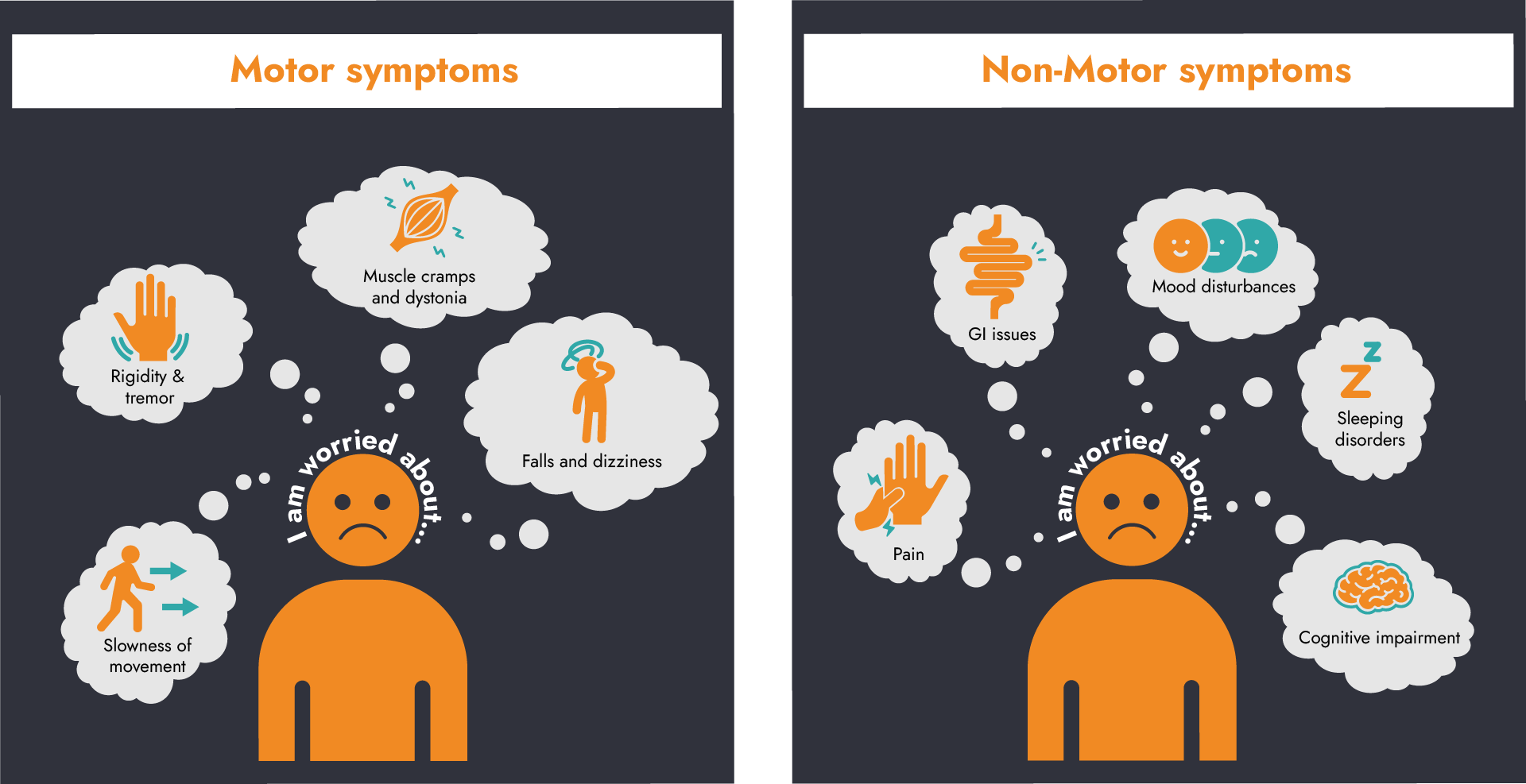
Figure 2. Common motor and non‑motor symptoms associated with Parkinson’s.
Early detection and diagnosis
Providing an accurate diagnosis of Parkinson’s can be challenging even when symptoms are fully apparent, owing to their overlap with other neurodegenerative conditions [10]. At present, diagnosis is primarily clinical, relying on patient history and neurological examination [11]. The lack of a definitive diagnostic test can lead to delays or misdiagnosis, particularly in the early stages when symptoms may be subtle [5].
Biomarkers are objectively measurable biological indicators that can reflect the presence, progression or underlying pathology of a disease, as well as response to treatment. The development of a quantitative biomarker for early Parkinson’s would not only facilitate earlier diagnosis but could also enable improved understanding and assessment of disease progression and response to treatment [12]. Crucially, the ability to identify individuals with early-stage Parkinson’s, in whom a significant proportion of dopaminergic neurons remain intact, would be highly valuable for research and for clinical trials of disease-modifying therapies aimed at slowing or halting disease progression [12].
A breakthrough in Parkinson’s biomarker research was the development of the seed amplification assay [12]. This assay works by first detecting the abnormal alpha synuclein protein that accumulates in the brain in patients with Parkinson’s, then amplifying tiny ‘seeds’ of the misfolded protein in the spinal fluid, making it possible to identify Parkinson’s-related changes even at very early stages [12].
Current treatment and research directions
Currently there is no curative treatment for Parkinson’s, and therapy mainly focuses on alleviating the motor symptoms and maintaining quality of life. The main therapy administered is levodopa (L-dopa), which is a precursor to dopamine and aims to restore levels of it to improve motor symptoms [13]. Non-pharmacological support is often offered alongside this, in the form of physiotherapy, exercise, and speech and language therapy [13].
Research is now increasingly concentrated on developing disease-modifying treatments that target the underlying biological mechanisms of Parkinson’s, such as alpha synuclein accumulation, rather than simply managing symptoms. Phase III trials of ambroxol, which has long been used to treat coughs, are ongoing in Parkinson’s [14]. Ambroxol increases the activity of the enzyme glucocerebrosidase (GCase), which is produced by the GBA gene and is believed to play a role in Parkinson’s [14]. Some individuals with Parkinson’s carry a single faulty copy of GBA which can reduce GCase activity and contribute to the accumulation of harmful proteins in the brain. By boosting GCase activity, ambroxol may help support normal cellular clearance processes, making it a promising candidate for a potential disease-modifying treatment for Parkinson’s [14]. While the results of clinical studies are needed, this repurposing approach highlights the potential to accelerate the development of disease-modifying therapies by building on medicines with an established safety profile, offering renewed hope for altering the long-term course of Parkinson’s.
How does Parkinson’s impact daily life and how can we help?
Parkinson’s can make everyday tasks more challenging, as symptoms such as tremor, rigidity and slowness of movement can affect walking, dressing and normal activity. It can also impact non-motor aspects of daily life, like sleep, mood and concentration, which may considerably reduce independence and quality of life over time. This condition not only affects those living with it but also their close family and friends, who often take on caring responsibilities. Parkinson’s can place significant emotional, physical, and financial strain on carers [2]. Raising awareness is essential to improve understanding of Parkinson’s symptoms and their daily impact, and to ensure people affected receive the recognition, support and care they need.
Charities and awareness campaigns play a vital role by funding research, expanding support services and connecting individuals and families with practical resources. Organisations such as Parkinson’s UK and Parkinson’s Care & Support UK provide helplines, community groups and guidance both for people with Parkinson’s and for their carers. At an individual level, patience, empathy and practical day-to-day support can make a meaningful difference. Together, through awareness and advocacy, we can help create change and provide a more supportive environment for everyone affected by Parkinson’s.
The information in this article is not intended or implied to be a substitute for professional medical advice, diagnosis or treatment. All content is for general information purposes only. Always seek the guidance of your doctor or other qualified healthcare professional with any questions you may have regarding your health or medical condition.
#ParkinsonsAwarenessMonth2026 #FightParkinsons #PDHope #UniteForParkinsons #ParkinsonsResearch
References
- Parkinson’s Care and Support UK. Parkinson’s Awareness Month 2026 – Parkinson’s Care and Support UK. Available at: https://parkinsonscare.org.uk/parkinsons-awareness-month-2026/. Accessed March 2026.
- World Health Organization. Parkinson disease. Available at: https://www.who.int/en/news-room/fact-sheets/detail/parkinson-disease. Accessed April 2026.
- Su D, Cui Y, He C et al. Projections for prevalence of Parkinson’s disease and its driving factors in 195 countries and territories to 2050: Modelling study of Global Burden of Disease Study 2021. BMJ 2025; 388 (8458): e080952.
- Parkinson’s UK. (2026). World Parkinson’s Day. Available at: https://www.parkinsons.org.uk/community/world-parkinsons-day. Accessed March 2026.
- Dugger BN and Dickson DW. Pathology of neurodegenerative diseases. Cold Spring Harb Perspect Biol 2017; 9 (7): a028035.
- Cramb KML, Beccano-Kelly D, Cragg SJ et al. Impaired dopamine release in Parkinson’s disease. Brain 2023; 146 (8): 3117–3132.
- Pitton Rissardo J, McGarry A, Shi Y et al. Alpha-synuclein neurobiology in Parkinson’s disease: A comprehensive review of its role, mechanisms, and therapeutic perspectives. Brain Sci 2025; 15 (12): 1260–1260.
- UK National Health Service. Parkinson’s disease – symptoms. Available at: https://www.nhs.uk/conditions/parkinsons-disease/symptoms/. Accessed April 2026.
- Yao L, Liang W, Chen J et al. Constipation in Parkinson’s disease: A systematic review and meta-analysis. Eur Neurol 2022; 86 (1): 34–44.
- Tolosa E, Garrido A, Scholz SW et al. Challenges in the diagnosis of Parkinson’s disease. Lancet Neurol 2021; 20 (5): 385–397.
- UK National Health Service. Parkinson’s disease – diagnosis. Available at: https://www.nhs.uk/conditions/parkinsons-disease/diagnosis/. Accessed April 2026
- Oliveira LM, Frasier M and Hutten SJ. Collaborative action for biomarker breakthroughs: Validating α-synuclein seed amplification assays in Parkinson’s disease. J Parkinsons Dis 2026; Epub ahead of print (DOI: 10.1177/1877718×261431949).
- UK National Health Service. Parkinson’s disease – treatment. Available at: https://www.nhs.uk/conditions/parkinsons-disease/treatment/. Accessed April 2026.
- Rapsodi Study. AsPro-PD: Phase III ambroxol trial. Available at: https://www.rapsodistudy.com/en/ambroxol. Accessed March 2026.
 Group
Group