



March marks the European Colorectal Cancer Awareness Month [1]. Globally, colorectal cancer (CRC) represents a major public health challenge. It is the third most commonly diagnosed cancer and the second leading cause of cancer-related death worldwide, with more than 1.9 million new cases and nearly 1 million deaths each year [2]. In the United Kingdom, it is the fourth most common cancer, after prostate, breast and lung cancers [3].
What is CRC?
CRC, sometimes referred to as bowel cancer, develops in the colon or rectum, which together form the large intestine [4,5]. The disease typically develops gradually through the accumulation of genetic mutations in the cells lining the colon, often beginning as benign growths known as polyps that can transform into cancer over time (Fig. 1) [4,5]. Inflammatory conditions such as inflammatory bowel disease can lead to increased risk of CRC [5].
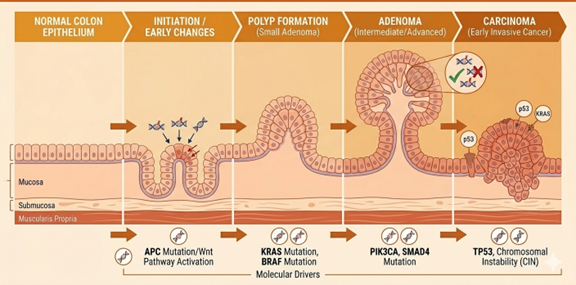
Figure 1: Disease mechanism of the adenoma–carcinoma sequence in colorectal cancer (normal colon epithelium → polyp formation → adenoma → carcinoma), with associated accumulation of genetic mutations [4,5].
Global trend of increased early onset
For decades, CRC was widely considered a disease that primarily affects older adults [6]. However, an unexpected and concerning trend has emerged in recent years: increasing numbers of younger adults are being diagnosed with CRC. Researchers now refer to this phenomenon as early-onset CRC, typically defined as CRC diagnosed before the age of 50.
Recent analyses using international cancer registry data have shown that incidence rates of early-onset CRC are increasing in multiple countries, particularly in high-income regions including North America, Europe and Oceania [6]. A large population-based study examining the data from 50 countries reported that early-onset CRC incidence increased in 27 countries and territories, with some of the fastest increases observed in New Zealand, Chile, Puerto Rico and England (Fig. 2) [6]. In the United Kingdom alone, more than 2,600 people under the age of 50 are diagnosed with bowel cancer each year [7].

Figure 2: Global early-onset colorectal cancer trends in those aged 25–49 years old [6].
Why are cases increasing in younger adults?
The reasons underlying the increase in early-onset CRC remain unclear; however, several biological and environmental factors have been proposed, including diets high in processed foods and red meat, and low in fibre; increasing prevalence of obesity and metabolic disorders such as diabetes; alterations in the gut microbiome driven by diet, antibiotic exposure and lifestyle factors; and potential environmental or chemical exposures, particularly during early life (Fig. 3) [8].

Figure 3: Potential drivers of early-onset colorectal cancer include diet, obesity, microbiome changes, metabolic syndrome and environmental exposures [8].
Challenges in detection
One of the major challenges associated with early-onset CRC is delayed diagnosis [7–9]. Screening programmes, lifestyle interventions and improvements in treatment have helped reduce the incidence and mortality in individuals over the age of 50. Screening programmes in many countries have historically targeted adults aged 50 years and older. As a result, younger adults are less likely to undergo routine screening.
Screening allows clinicians to detect and remove precancerous polyps before they progress to cancer, which has contributed to declining incidence of CRC in older age groups [7–9]. However, younger adults are typically excluded from routine screening programmes, which may partly explain the increasing incidence observed in this group. Campaigns such as European Colorectal Cancer Awareness Month and Bowel Cancer UK’s ‘Never Too Young’ campaign aim to bring awareness about CRC screening especially in younger individuals [1,7]
Symptoms such as rectal bleeding, persistent changes in bowel habits, abdominal pain, fatigue or unexplained weight loss may initially be attributed to less serious conditions [7,10], thus leading to delays in diagnosis and treatment (Fig. 4) [7]. Awareness campaigns have therefore emphasised the importance of recognising symptoms and encouraging timely medical evaluation [1,7].
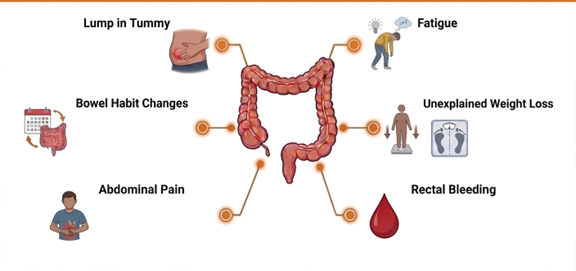 Figure 4: Common symptoms of colorectal cancer [7].
Looking ahead
Improving awareness among healthcare professionals and the public, identifying modifiable risk factors and evaluating potential changes to screening strategies may all play important roles in addressing the increasing prevalence of CRC [5,8]. Continued research into lifestyle, environmental exposures and biological mechanisms will be essential to develop effective prevention strategies and reduce the future burden of CRC.
The information in this article is not intended to be a substitute for professional medical advice, diagnosis or treatment. All content is for general information purposes only. Always seek the guidance of your doctor or other qualified healthcare professionals with any questions you may have regarding your health or medical condition.
Reference
- Digestive Cancers Europe (DiCE). European Colorectal Cancer Awareness Month (ECCAM). Available at: https://eccam.digestivecancers.eu/about-the-campaign/ Accessed March 2026.
- World Health Organization. Colorectal cancer. Available at: https://www.who.int/news-room/fact-sheets/detail/colorectal-cancer. Accessed March 2026.
- World Cancer Research Fund. UK Cancer statistics. Available at: https://www.wcrf.org/preventing-cancer/cancer-statistics/uk-cancer-statistics/. Accessed March 2026.
- Ewing I, Hurley JJ, Josephides E et al. The molecular genetics of colorectal cancer. Frontline Gastroenterol 2014; 5 (1): 26–30.
- Hossain MS, Karuniawati H, Jairoun AA et al. Colorectal cancer: A review of carcinogenesis, global epidemiology, current challenges, risk factors, preventive and treatment strategies. Cancers (Basel) 2022; 14 (7): 1732.
- Sung H, Siegel RL, Laversanne M et al. Colorectal cancer incidence trends in younger versus older adults: An analysis of population based cancer registry data. Lancet Oncol 2025; 26 (1): 51–63.
- Bowel Cancer UK. Never Too Young. Available at: https://www.bowelcanceruk.org.uk/campaigning/never-too-young/. Accessed March 2026.
- Zhao J, Ji H, Li K et al. Decoding the genetic and environmental forces in propelling the surge of early onset colorectal cancer. Chin Med J (Engl) 2025; 138 (10): 1163–1174.
- Saraiva MR, Rosa I, Claro I. Early onset colorectal cancer: A review of current knowledge. World J Gastroenterology 2023; 29 (8): 1289–1303.
- Bowel Cancer UK. Symptoms of bowel cancer. Available at: https://www.bowelcanceruk.org.uk/about-bowel-cancer/symptoms/. Accessed March 2026.

Author: Tatenda Mutshiya |
Associate Medical Writer | Porterhouse Medical
 Group
Group